
The best team rituals leave something behind
Events end, but the things a team makes together stay. Here’s why that matters on remote teams, and how to turn small rituals into something people come back to.
Ask a team about its best moments and you’ll rarely hear about an agenda. You’ll hear about the terrible drawing from a game that became the team’s unofficial mascot. The playlist from launch week. The thread where everyone posted their desk setup on day one.
Notice what those have in common. They weren’t just things that happened. They’re things that still exist. You can scroll back to them, link to them, and show them to the person who joined last month.
That’s the difference between a ritual that fades and one that lasts. The good ones leave something behind.
A moment ends. A thing stays.
Most team activities are built as moments: a game, a call, a celebration. When the call ends, so does the activity, and whatever happened lives only in the memories of the people who were there.
In an office, that’s mostly fine. The moment gets retold at lunch, and the photo ends up on the fridge. A remote team has no lunch line and no fridge. Unless the moment is saved somewhere, it disappears the second everyone clicks “Leave meeting”. (It’s the same pattern behind why the lift from an offsite fades.)
When an activity produces something, like a drawing, a photo, a list, or a set of answers, it keeps working after the call ends:
- It gives people a reason to come back. A wall that changes is worth checking. A finished call isn’t.
- It includes people who missed it. Someone in another time zone can catch up, react, and add their own piece later.
- It holds the inside jokes. Jokes need context, and a saved drawing carries its own.
- It tells new hires who you are. Scrolling back through a few months of team posts says more about a team than any onboarding deck.
Why making it matters
There’s a well-known finding in consumer psychology called the IKEA effect. In a 2012 study, Michael Norton, Daniel Mochon, and Dan Ariely found that people valued things they had assembled themselves, like IKEA boxes, origami, and Lego sets, more than identical ones made by someone else.
The study looked at individuals and objects, not teams, so it’s worth being careful with it. But one detail fits team rituals well: the effect disappeared when people built something and then took it apart, or didn’t finish it. The value came from making something and keeping it.
That’s a useful lens for team activities. A game where everyone draws is fun. A game where everyone draws and the drawings end up somewhere the team will see next week is fun and also a little bit theirs.
What can a team leave behind?
It doesn’t need to be ambitious. A few simple ones:
- A shared wall where game results, photos, and answers to prompts collect over time.
- A team album with one photo a month, no faces or homes required: a view, a mug, a lunch.
- A hall of fame for game winners, best guesses, and most memorable losses.
- A collection of bad drawings. Possibly the most loved thing a team can own.
- A team playlist where everyone adds one song after each launch or milestone.
- A list of firsts: first customer, first hire outside the founding team, first time everyone was online at once.
How to make an activity leave something behind
You can apply this to almost any ritual you already have.
- Decide where it goes before you start. If the answer is “somewhere in chat”, it will be buried by Thursday. Pick one place and keep using it.
- Make adding cheap. One photo, one line, one click. If contributing takes effort, only the organizer will do it.
- Keep the imperfect stuff. The bad drawing and the wrong guess are often what people remember. Don’t curate them away.
- Look back on purpose. Once a month, resurface something old, like the best guess of the month or what the team was up to a year ago. Shared things only work if people see them again.
- Let it belong to the team. People should be able to skip, remove their own posts, or leave something out. A shared space works because it feels safe to add to, not because everyone has to.
Where Teamopia fits
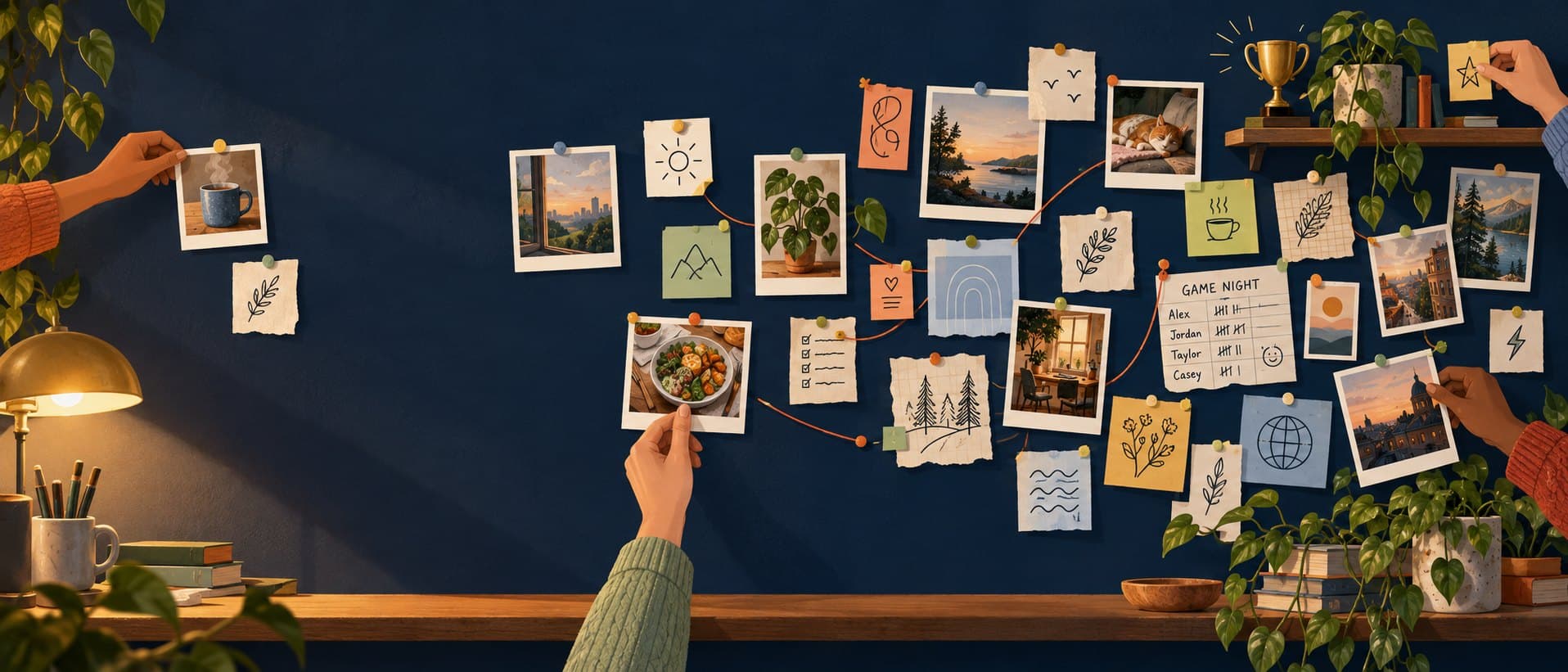
This idea is at the center of how we built Teamopia. The live games are the moments. The mural is where they land: game results, photos, and celebrations collect on the team’s shared wall, so people can catch up on their own time, react, and reply. Weekly quests add small collectibles along the way.
You don’t need Teamopia to do any of this, though. A shared doc, a dedicated channel with one clear purpose, or a photo folder can all work if you follow the steps above.
A simple test
Open wherever your team keeps its shared moments and ask:
- Is there anything from last month that someone would still smile at?
- Could someone who missed an event catch up on it here?
- Could a new hire scroll through it and get a feel for who this team is?
If the answer is no, you don’t need a bigger event. You need your next small one to leave something behind.